The Most Common Water Care Mistakes for Hot Tubs and Pools

Are you struggling with water care issues in your pool or hot tub? Your water care team at Fiesta put this article together just for you. We look at common water care mistakes and how you can solve or prevent them.
Tulsa conditions like hard water, our excessive summer heat driving faster TDS buildup, and more can make water care tricky. The good news is we’re always here to help.
We look at these water care mistakes: neglecting to balance your water, treating your hot tub like a tiny pool, not paying attention to pH, total alkalinity, and calcium hardness, letting dissolved solids build up, never bringing us a water sample, and only shocking your pool when it looks bad.
Here are the mistakes that trip up pool and hot tub owners most often, and what to do instead.
Why Isn’t My Chlorine Working?
It’s most likely because you chase sanitizer without balancing your water first.
Because Tulsa water starts out on the hard side, pools and spas here are more prone to scale-related sanitizer inefficiency than owners moving from a softer-water market might expect.
Chlorine and bromine get all the attention, but they only work as hard as your water lets them. If your pH, total alkalinity, or calcium hardness sit outside the ideal range, your sanitizer loses efficiency even when the level on the test strip looks fine.
You end up adding more product to solve a problem that was never about sanitizer in the first place.
You want to keep your pH between 7.4 and 7.6. That range keeps swimmers comfortable and protects your equipment and surfaces from corrosion or scaling. Total alkalinity should generally sit around 120 to 150 ppm in a pool, since it acts as a buffer that keeps your pH from swinging every time it rains or someone jumps in.
Pro tip: Bring a water sample in and let our BioGuard ALEX water analysis tell you exactly what’s out of balance before you buy products you don’t need.
 Can I Treat My Hot Tub Like a Small Pool?
No, you can’t.
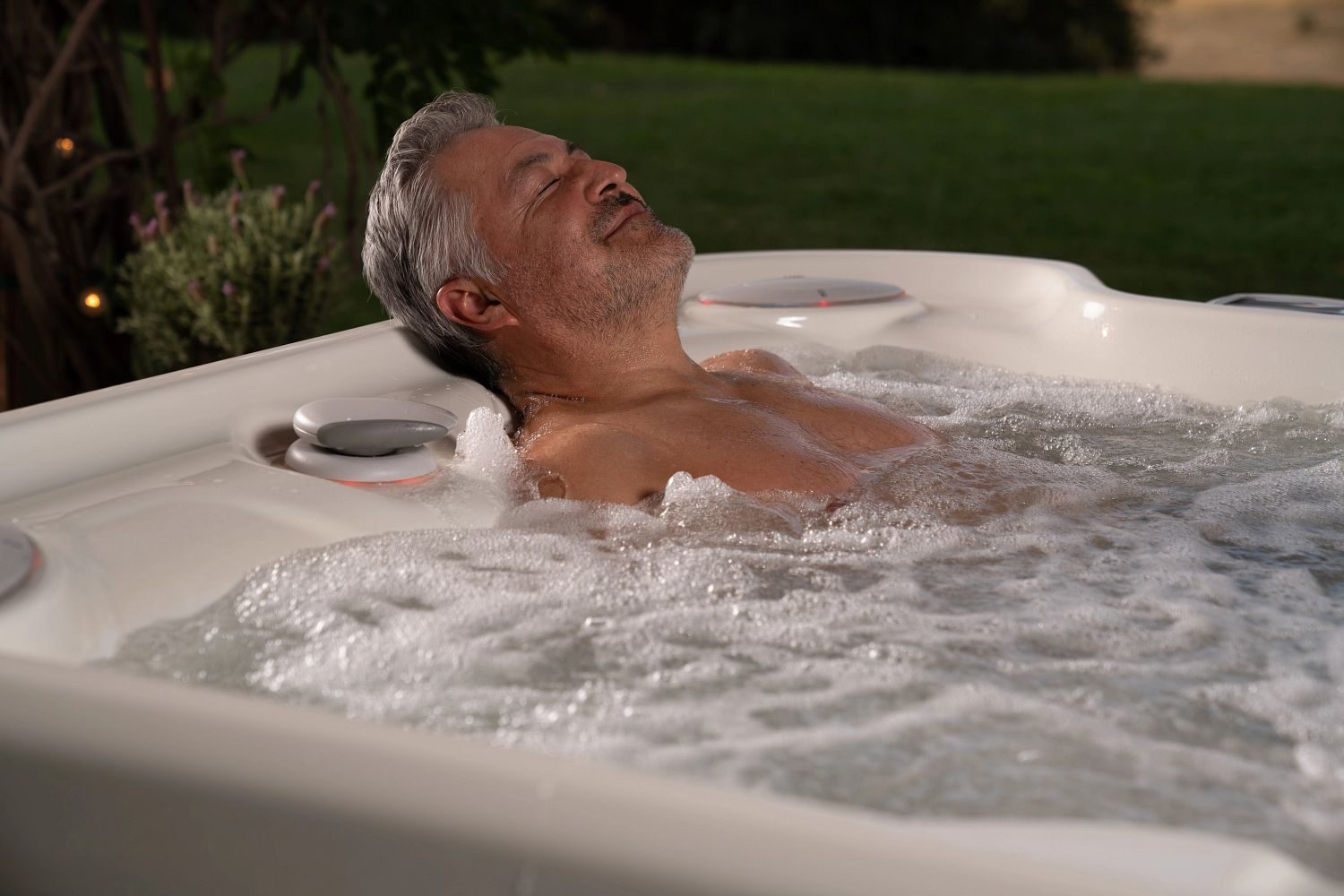
A hot tub isn’t a miniature pool, and treating it like one is one of the most common mistakes we see.
Hot tub water runs warmer, holds a much higher bather load per gallon, and swings in pH and sanitizer far more quickly than pool water. That means your spa needs more frequent sanitizer additions and closer attention, even though you’re working with a smaller volume of water.
Test your spa’s sanitizer and pH at least once a week, and more often if you use it frequently. Total alkalinity in a spa typically runs a bit lower than in a pool, so don’t assume the same targets apply across the board.
Pro tip: Ask us about SpaGuard products formulated specifically for spa water, not repurposed pool chemicals.
Do I Have to Care About Total Alkalinity?
Yes, you need to pay attention to it even if your pH looks fine.
First, though, let’s define it. Total alkalinity is the capacity of your water to neutralize acids, acting as a pH buffer to prevent wide, damaging fluctuations.
Total alkalinity doesn’t get the spotlight that pH and chlorine do, but low alkalinity is often the hidden reason your pH won’t hold steady. When alkalinity drops too low, your water becomes corrosive and can lead to pitting, etching, or staining on pool surfaces, along with itchy skin and irritated eyes for swimmers. High alkalinity causes its own headaches, including cloudy water and scale buildup.
Test alkalinity along with pH and calcium hardness a few times a week, not just when something looks off.
Pro tip: If your alkalinity keeps drifting, bring us a sample so we can pinpoint the actual cause instead of guessing.
 What About Calcium Hardness?
Well, you don’t want to ignore it.
Calcium hardness rarely gets checked at home, but it matters just as much as pH and alkalinity.
Water with too little calcium hardness pulls calcium from your pool’s plaster, tile, or equipment, leading to etching and a rough, uncomfortable surface. Water with too much calcium can scale your heater, filter, and tile line.
In a hot tub, calcium hardness generally needs to run lower than in a pool, so the target range is different.
Pro tip: Note that, according to the City of Tulsa, our fill water starts out moderately hard to hard already. The city’s A.B. Jewell plant runs around 140 ppm/8.2 grains per gallon, and the Mohawk plant runs around 89 ppm/5.2 grains per gallon, depending on which part of the metro you’re in.
So, if you’re on Tulsa city water, you’re likely starting with fill water that’s already moderately hard to hard. This means calcium hardness can climb into scaling territory faster than owners expect, especially after a pool gets refilled or topped off.
Have your calcium hardness checked monthly along with a full water analysis so problems get caught before they show up as visible damage.
When Should I Shock My Pool?
The easy answer is all the time during the summer season.
Shocking your pool isn’t a rescue step you save for green water. It’s routine maintenance that clears out the organic contaminants, like sweat, lotion, and debris, that build up from regular use.
Skipping it until your water already looks cloudy or green means you’re always playing catch-up instead of staying ahead of the problem.
Shock your pool weekly, or after heavy use like a pool party, heavy rain, or a run of hot, sunny days. Spas need regular shocking too, especially with frequent use, since a small volume of water accumulates contaminants faster.
Pro tip: Set a weekly reminder rather than waiting for a visible sign that something’s wrong.
 Tell Me About Total Dissolved Solids
Total Dissolved Solids (TDS) measure the combined concentration of inorganic salts, minerals, and organic matter present in water, expressed in parts per million (ppm) or milligrams per liter (mg/L), and you don’t want them to add up.
Every chemical you add, plus everything that evaporates and gets replaced with fresh water, leaves something behind. Over time, total dissolved solids climb, and once they get too high, your water can look dull, turn foamy, or develop an odor, even when every other test result reads normal.
This is especially common in hot tubs, where the water volume is small, and TDS accumulates faster.
For pools, partially draining and refilling with fresh water dilutes TDS. For hot tubs, this is exactly why a full drain and refill on a regular schedule matters, rather than topping off the same water indefinitely.
Pro tip: Tulsa’s summer heat means faster evaporation, which means the minerals and dissolved solids left behind concentrate faster than they would in a milder climate.
 Can I Just Test My Water at Home?
You want a combined approach: test at home and in one of our stores.
At-home test strips or drop test kits are a great way to check your water day to day, but they can’t catch everything.
A full lab water analysis in one of our retail stores measures total alkalinity, calcium hardness, metals, and total dissolved solids in addition to pH and sanitizer. It’s the best way to catch problems before they turn into algae, stains, or equipment damage.
Bring a pool water sample in at least monthly (more during the height of the season). For spas, every four to six weeks is the general recommendation, though more frequent use calls for more frequent testing.
Pro tip: This test is complimentary at Fiesta. There’s no reason to guess when the answer is a short drive away.
What Water Care Habit Fixes Almost Everything?
Nearly every mistake on this list comes back to the same root cause: guessing instead of testing. Water chemistry isn’t complicated once you know your actual numbers, but it’s nearly impossible to manage by feel.
The fastest way to break the guessing cycle is to bring a sample of your pool or hot tub water into Fiesta Pools and Spas for a free BioGuard water analysis.
We test everything an at-home strip can’t, tell you exactly what your water needs, and get you set up with the right products. You will only find the best chemicals at Fiesta, and that’s the ones that really work. And, we won’t ever sell you something you don’t need.
Stop by either location, and let’s get your water dialed in before small mistakes turn into bigger ones.